
Table of Contents
ToggleEducation today ideas are reshaping classrooms across the globe. Teachers and students alike are experiencing a shift in how knowledge is shared, absorbed, and applied. Gone are the days of one-size-fits-all instruction. Modern education embraces flexibility, technology, and a deeper focus on student well-being.
This article explores four key approaches driving this transformation. From personalized learning to project-based experiences, these education today ideas offer practical strategies for educators, parents, and policymakers. Each approach addresses a specific challenge in modern schooling while preparing students for a rapidly changing world.
Key Takeaways
- Education today ideas focus on personalized learning, technology integration, social-emotional learning, and project-based experiences to prepare students for a changing world.
- Personalized learning puts students at the center by adjusting content, pace, and methods to fit individual needs—resulting in stronger academic gains.
- Technology integration works best when used as a tool to achieve specific learning goals, not as a replacement for skilled teaching.
- Social-emotional learning (SEL) improves academic performance by 11 percentile points on average while reducing student stress and behavioral issues.
- Project-based learning helps students retain knowledge longer by applying concepts to real-world problems through hands-on collaboration.
- Schools implementing these education today ideas report higher engagement, better attendance, and improved outcomes across diverse student populations.
Personalized Learning Approaches
Personalized learning puts students at the center of their education. This approach recognizes that every learner has unique strengths, weaknesses, and interests. Instead of forcing all students through identical lessons, educators adjust content, pace, and methods to fit individual needs.
Several strategies make personalized learning possible:
- Learning profiles: Teachers create detailed profiles for each student, tracking their preferred learning styles, academic progress, and personal interests.
- Flexible pacing: Students move through material at their own speed. Fast learners advance quickly while struggling students receive extra support.
- Choice-based assignments: Students select projects or topics that interest them, increasing engagement and motivation.
Data plays a crucial role in personalized learning. Teachers use assessments and learning analytics to identify gaps in understanding. They then adjust instruction accordingly. This ongoing feedback loop helps students build skills more efficiently.
Education today ideas like personalized learning require a shift in classroom structure. Teachers become facilitators rather than lecturers. They spend less time delivering information to entire classes and more time coaching individual students.
The results speak for themselves. Research from the RAND Corporation found that students in personalized learning schools made greater gains in math and reading compared to peers in traditional settings. Schools implementing these education today ideas see improved attendance, higher engagement, and better academic outcomes.
Technology Integration in the Classroom
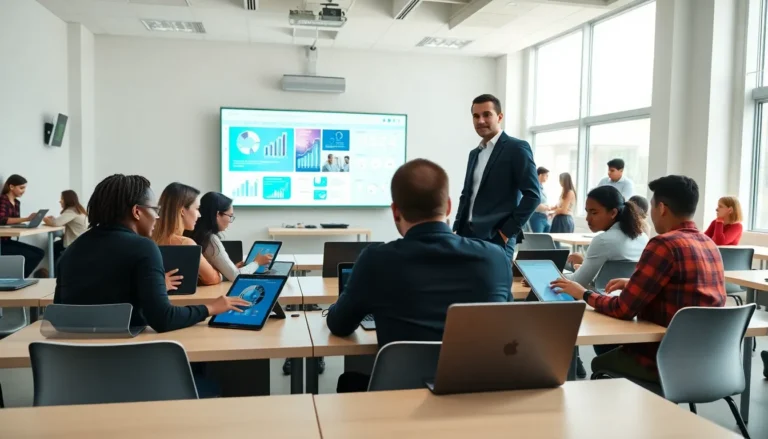
Technology has become essential to education today ideas that drive meaningful learning. Digital tools extend what’s possible in classrooms, creating opportunities that didn’t exist a decade ago.
Effective technology integration goes beyond handing students tablets. It means using digital resources to achieve specific learning goals. Here’s what that looks like in practice:
- Interactive platforms: Tools like Kahoot, Nearpod, and Google Classroom make lessons more engaging. Students participate actively rather than sitting passively.
- Virtual reality: VR lets students explore ancient Rome, walk through the human bloodstream, or visit distant ecosystems. These immersive experiences make abstract concepts concrete.
- AI-powered tutoring: Intelligent tutoring systems provide instant feedback and adapt to student responses. They offer practice problems matched to each learner’s current skill level.
- Collaborative tools: Cloud-based platforms enable students to work together on projects regardless of physical location.
Teachers face real challenges when integrating technology. Not every school has reliable internet or enough devices. Professional development often lags behind the tools teachers are expected to use. And screen time concerns remain valid, balance matters.
Still, education today ideas that incorporate technology well prepare students for modern workplaces. Digital literacy isn’t optional anymore. Students need to evaluate online sources, create digital content, and collaborate through virtual channels.
The most successful schools treat technology as a tool, not a replacement for good teaching. A skilled teacher using a whiteboard will outperform a mediocre teacher with expensive gadgets every time. Technology amplifies effective instruction: it doesn’t substitute for it.
Social-Emotional Learning and Student Well-Being
Academic achievement matters, but it tells only part of the story. Education today ideas increasingly emphasize social-emotional learning (SEL) alongside traditional subjects. This shift acknowledges a simple truth: students can’t learn effectively when they’re stressed, anxious, or struggling emotionally.
SEL teaches five core competencies:
- Self-awareness: Understanding one’s own emotions, thoughts, and values
- Self-management: Regulating emotions and behaviors effectively
- Social awareness: Showing empathy and understanding diverse perspectives
- Relationship skills: Building and maintaining healthy connections
- Responsible decision-making: Making constructive choices
Schools carry out SEL through dedicated lessons, morning meetings, and integration across subjects. A history class might discuss the emotional experiences of historical figures. A science lesson could address ethical decision-making in research.
The evidence supporting SEL is strong. A meta-analysis of 213 studies found that SEL programs improved academic performance by 11 percentile points on average. Students also showed better behavior, reduced emotional distress, and improved attitudes toward school.
Education today ideas around well-being extend beyond formal SEL programs. Schools are redesigning schedules to allow more breaks. They’re creating quiet spaces for students who feel overwhelmed. Some districts have added mental health professionals to their staff.
Critics sometimes argue that schools should focus strictly on academics. But the data suggests otherwise. Students who feel safe, supported, and emotionally regulated learn more effectively. SEL isn’t a distraction from academic goals, it’s a foundation for achieving them.
Project-Based and Experiential Learning
Traditional education often separates learning from doing. Students memorize facts for tests, then forget them weeks later. Project-based learning (PBL) takes a different approach. It asks students to apply knowledge to real-world problems.
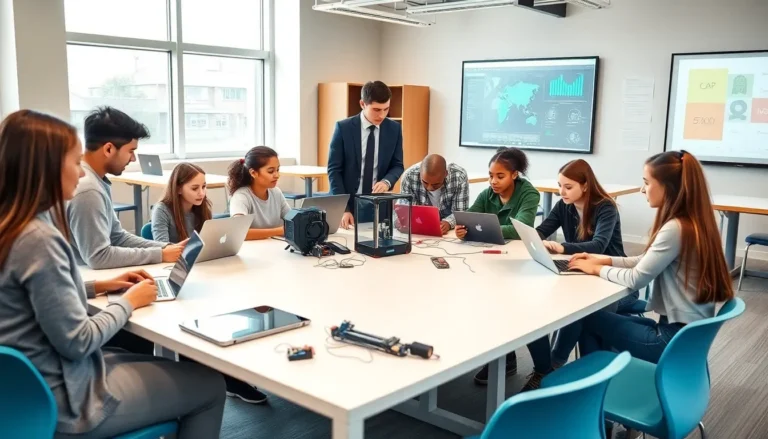
In PBL, students work on extended projects that require research, collaboration, and creative problem-solving. A middle school class might design a community garden, calculating soil requirements, budgeting materials, and presenting their plan to local officials. The project integrates math, science, writing, and public speaking naturally.
Experiential learning shares similar principles. Students learn by doing, conducting experiments, visiting workplaces, or completing internships. These education today ideas connect classroom content to life outside school walls.
Key benefits of project-based and experiential learning include:
- Deeper understanding: Students remember concepts they’ve applied, not just memorized
- Skill development: Projects build communication, teamwork, and time management abilities
- Increased motivation: Real-world relevance makes learning feel meaningful
- Career exploration: Students discover interests and aptitudes through hands-on work
Implementing these education today ideas requires planning. Teachers must design projects that cover required standards while remaining authentic. Assessment looks different too, rubrics evaluate process and products rather than just test scores.
Some teachers worry about covering curriculum through projects. This concern is valid but manageable. Well-designed projects address multiple learning objectives simultaneously. A single extended project can cover more standards than weeks of traditional instruction.
Schools worldwide have embraced PBL with impressive results. High Tech High, a network of charter schools in California, uses projects as their primary teaching method. Their students outperform state averages and graduate at higher rates than comparable populations.