Table of Contents
ToggleEducation today looks nothing like it did a generation ago. Classrooms have moved online, textbooks have become tablets, and students can now learn calculus from a teacher 3,000 miles away. This shift isn’t just about new gadgets, it’s changing how students think, collaborate, and prepare for careers that didn’t exist five years ago.
The numbers tell a clear story. Global spending on educational technology hit $142 billion in 2023, and that figure keeps climbing. Schools across the United States have adopted hybrid learning models, blended curricula, and AI-powered tutoring systems. But with all this change comes real questions: Are students actually learning better? What gets lost when education goes digital? And how do educators keep up?
This article breaks down the major shifts in education today, examines the challenges schools face, and explores how technology is reshaping classrooms. It also looks at what students need to thrive in a workforce that demands new skills every decade.
Key Takeaways
- Education today has fundamentally shifted from traditional classrooms to digital and hybrid learning models, accelerated by the COVID-19 pandemic.
- Global spending on educational technology reached $142 billion in 2023, reflecting massive investment in AI tutoring, learning platforms, and adaptive tools.
- The equity gap remains a critical challenge—students without reliable internet or devices fall behind as education today becomes increasingly tech-dependent.
- Teacher burnout and student mental health issues have reached crisis levels, with 44% of K-12 teachers reporting burnout in 2023.
- Modern education prioritizes transferable skills like critical thinking, collaboration, and adaptability over memorizing content for an evolving workforce.
- Successful technology implementation in education today requires balancing benefits like personalized learning with risks such as data privacy concerns and screen fatigue.
The Shift From Traditional to Digital Learning
For decades, education followed a predictable pattern: students sat in rows, teachers lectured from the front, and tests measured memorization. That model worked for a different era. Education today demands something else entirely.
The COVID-19 pandemic accelerated digital learning by at least a decade. Schools that had never considered online instruction suddenly had no choice. By 2021, over 1.5 billion students worldwide had experienced some form of remote learning. Many of those changes stuck.
Digital learning platforms now offer personalized instruction that traditional classrooms can’t match. A student struggling with fractions can watch the same lesson ten times. A student who masters the material quickly can move ahead without waiting for the class. This flexibility represents a fundamental change in how education today operates.
But the shift isn’t just about convenience. Digital learning creates data. Teachers can see exactly where students struggle, how long they spend on problems, and which concepts need reinforcement. This information allows educators to intervene before a student falls too far behind.
Of course, not everyone celebrates these changes. Critics argue that screen time harms developing brains, that online learning lacks the social interaction students need, and that the digital divide leaves poor students behind. These concerns deserve serious attention, which brings us to the challenges facing education today.
Key Challenges Facing Modern Education Systems
Education today faces problems that would have seemed strange to teachers fifty years ago. The challenges are practical, philosophical, and often deeply political.
The Equity Gap
Not every student has a laptop. Not every home has reliable internet. During the pandemic, some students attended class from cars parked outside libraries to access Wi-Fi. Education today cannot fulfill its promise if technology creates new barriers instead of removing old ones.
Schools in wealthy districts often have one-to-one device programs, high-speed connections, and dedicated IT staff. Schools in poor districts share outdated computers and rely on teachers who received minimal technology training. This gap affects outcomes in measurable ways.
Teacher Burnout
Teachers are exhausted. They’ve been asked to become tech support, mental health counselors, and curriculum designers, often with no additional pay or preparation time. A 2023 survey found that 44% of K-12 teachers reported feeling burned out, and turnover rates have spiked across the country.
Education today demands more from teachers than ever before. Many feel unsupported by administrators and overwhelmed by new expectations. Without addressing this crisis, no amount of technology will improve student outcomes.
Mental Health
Students are struggling too. Rates of anxiety and depression among young people have increased sharply over the past decade. Schools have become the front line for mental health intervention, but most lack the resources to meet demand. A single counselor might serve 500 students, far above recommended ratios.
These challenges don’t exist in isolation. They compound each other, making education today a more difficult enterprise than at any point in recent memory.
The Role of Technology in Today’s Classrooms
Technology has become central to education today, but its impact depends entirely on implementation. A smartboard collecting dust in the corner doesn’t help anyone.
Learning Management Systems
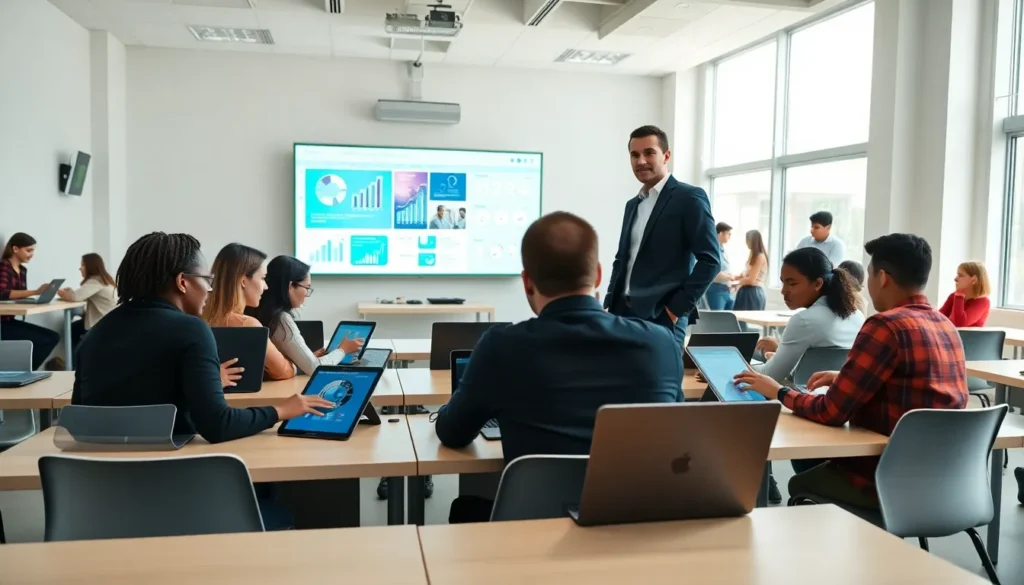
Platforms like Canvas, Google Classroom, and Schoology organize assignments, track progress, and help communication between students and teachers. These systems have become standard in most American schools. They work best when teachers receive proper training and students have reliable access.
AI Tutoring and Adaptive Learning
Artificial intelligence can now provide personalized instruction at scale. Programs like Khan Academy and DreamBox adjust difficulty based on student performance in real time. Early research suggests these tools improve outcomes, particularly for students who need extra practice.
Education today increasingly relies on AI to supplement human instruction. This doesn’t mean teachers become obsolete, quite the opposite. AI handles repetitive practice, freeing teachers to focus on critical thinking, creativity, and the human connections that no algorithm can replicate.
Virtual and Augmented Reality
Some schools have begun using VR headsets for immersive learning experiences. Students can tour ancient Rome, explore the human bloodstream, or practice lab experiments without expensive equipment. These applications remain expensive and limited, but they hint at what education today might become in the next decade.
The Risks
Technology also creates problems. Student data privacy remains a serious concern. Screen fatigue affects attention and retention. And the constant availability of information can reduce the motivation to actually learn and remember material.
Smart implementation of technology in education today requires balancing these benefits and risks.
Preparing Students for an Evolving Workforce
The jobs students will hold in twenty years may not exist yet. Education today must prepare them for that uncertainty.
Traditional education emphasized content knowledge, memorizing facts, dates, and formulas. That approach made sense when information was scarce and careers were stable. Neither condition holds anymore.
Skills Over Content
Employers consistently report that they value skills over specific knowledge. Critical thinking, communication, collaboration, and adaptability top the list. Education today has begun shifting toward these competencies, though progress remains uneven.
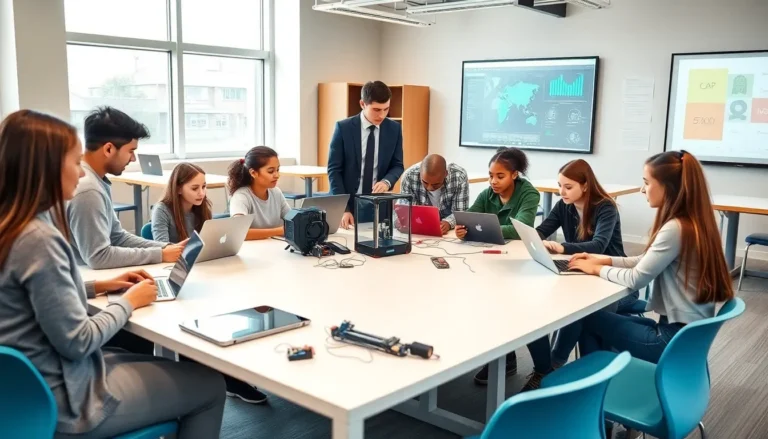
Project-based learning puts students in situations that require problem-solving and teamwork. Instead of memorizing the causes of World War I, students might analyze a modern conflict and propose solutions. This approach teaches content while building transferable skills.
STEM and Beyond
Science, technology, engineering, and math education receive enormous attention, and funding. These fields offer strong career prospects, and education today rightly emphasizes them.
But the humanities matter too. Writing clearly, understanding different perspectives, and thinking ethically become more valuable as AI handles technical tasks. Students who combine technical skills with strong communication will have advantages in almost any field.
Career Exploration
Education today increasingly includes career exposure programs, internships, and partnerships with local businesses. These experiences help students understand what different careers actually involve, information that’s hard to get from a textbook or website.
Schools that connect learning to real-world applications see higher engagement and better outcomes. Students work harder when they understand why the material matters.