Table of Contents
ToggleLanguage learning trends 2026 will reshape how millions of people acquire new languages. The industry continues to grow, with global language learning app revenue expected to exceed $10 billion by 2026. Technology drives much of this shift. Artificial intelligence, virtual reality, and community platforms now offer learners more options than traditional classroom instruction. This article explores four major language learning trends 2026 will bring to students, professionals, and casual learners alike. Each trend reflects broader changes in technology, global business, and human connection.
Key Takeaways
- Language learning trends 2026 will be driven by AI-powered personalization that adapts lessons to individual skill levels, learning speeds, and emotional cues.
- Virtual and augmented reality tools offer immersive experiences that boost vocabulary retention by up to 40% compared to traditional apps.
- Less commonly taught languages like Korean, Arabic, Hindi, and Portuguese are surging in popularity due to entertainment, business opportunities, and global economic shifts.
- Community-based platforms connecting learners with native speakers through language exchange are becoming essential for building real conversational skills.
- Combining AI tools with human interaction delivers the best results, as technology alone cannot teach cultural context, humor, and nuance.
- Social features like group challenges, accountability partners, and gamification significantly improve learner motivation and course completion rates.
AI-Powered Personalized Learning Experiences
Artificial intelligence will dominate language learning trends 2026 brings to the market. AI tutors now adapt lessons to individual skill levels, learning speeds, and personal goals. These systems analyze user performance in real time. They identify weak points and adjust exercises accordingly.
Major platforms like Duolingo, Babbel, and Rosetta Stone already use AI to customize content. In 2026, this technology will become more sophisticated. Expect AI to recognize emotional cues, such as frustration or boredom, and modify lessons to keep learners engaged.
Chatbots powered by large language models provide conversation practice at any hour. Unlike human tutors, these bots never tire. They offer instant feedback on grammar, vocabulary, and pronunciation. Some learners prefer this low-pressure environment to speaking with native speakers.
AI also excels at spaced repetition. It tracks which words and phrases a learner forgets and reintroduces them at optimal intervals. This method improves long-term retention. Studies show spaced repetition can double vocabulary retention compared to traditional memorization.
Personalization extends beyond lesson content. AI recommends learning schedules based on user habits. It suggests podcasts, videos, and articles in the target language that match a learner’s interests. This integration of authentic content accelerates fluency.
But, AI has limits. It cannot fully replace human interaction. Language includes cultural context, humor, and nuance that machines struggle to teach. Smart learners will combine AI tools with human conversation practice for the best results.
The Rise of Immersive and Virtual Reality Language Tools
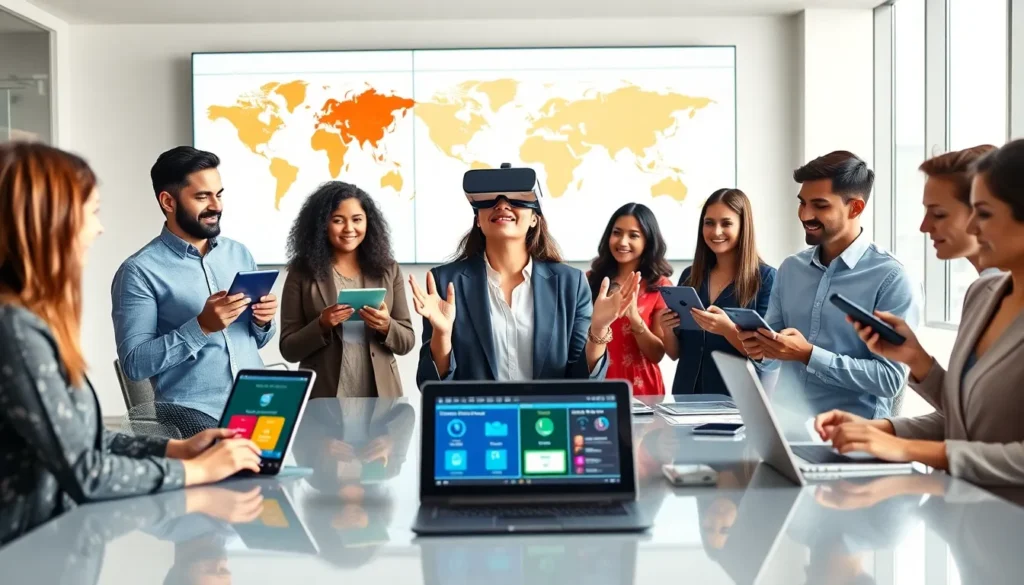
Virtual reality represents one of the most exciting language learning trends 2026 will showcase. VR headsets transport learners into simulated environments where they practice real-world scenarios. Ordering food in a Paris café. Bargaining at a Tokyo market. Checking into a hotel in Barcelona. These experiences build practical skills.
Meta, Apple, and other tech companies now invest heavily in educational VR content. Language apps designed for VR headsets create 360-degree environments with interactive characters. Learners speak to virtual shopkeepers, tour guides, and neighbors. The immersion helps the brain associate vocabulary with specific contexts.
Augmented reality offers a lighter alternative. AR apps overlay translations and vocabulary onto the physical world. Point a phone at a restaurant menu, and the app displays translations instantly. Walk through a city, and AR labels objects with their names in the target language.
Research supports immersive learning. A 2024 study from the University of Maryland found that VR learners retained 40% more vocabulary than those using traditional apps. The emotional engagement of virtual experiences creates stronger memory connections.
Cost remains a barrier. Quality VR headsets still run between $300 and $500. Not every learner can afford this investment. But prices continue to drop. By late 2026, entry-level headsets may reach price points accessible to most consumers.
Schools and corporate training programs lead VR adoption. Companies use VR to prepare employees for international assignments. Students in language classes take virtual field trips to countries where their target language is spoken. This trend will accelerate throughout 2026.
Growing Demand for Less Commonly Taught Languages
Spanish, French, and Mandarin have long dominated language education. But language learning trends 2026 show rising interest in less commonly taught languages. Korean, Arabic, Hindi, and Portuguese are gaining popularity.
K-pop and Korean entertainment drive much of the Korean surge. Young learners want to understand their favorite songs and shows without subtitles. The Korean language program at major universities has tripled enrollment over the past five years.
Arabic attracts learners interested in business opportunities in the Middle East and North Africa. Companies expanding into these regions need employees who speak the language. Arabic also draws learners interested in Islamic culture, history, and literature.
Hindi appeals to those doing business with India or exploring Indian media. India’s growing economic influence makes Hindi a strategic choice. Bollywood films and music introduce global audiences to the language.
Portuguese offers access to Brazil’s massive economy and Portugal’s European connections. Learners often overlook Portuguese even though its 260 million native speakers worldwide.
App developers respond to this demand. Language learning trends 2026 will bring more content for these less common languages. Courses that once existed only for major languages now appear for Swahili, Vietnamese, and Turkish.
Learners choosing less common languages often face fewer resources. They must seek out native speakers, media, and tutors more actively. But the reduced competition can offer advantages. Fewer people speak Korean professionally than Spanish. This scarcity creates opportunities in translation, business, and diplomacy.
Social and Community-Based Learning Platforms
Humans learn languages through connection. Social platforms capitalize on this truth. Language learning trends 2026 emphasize community features that pair learners with native speakers and fellow students.
Tandem, HelloTalk, and similar apps match users for language exchange. A Spanish speaker learning English connects with an English speaker learning Spanish. Both practice their target language through text, voice, and video chat. This exchange costs nothing but time.
Discord servers and Facebook groups gather learners around specific languages. These communities share resources, answer questions, and organize virtual meetups. Members post daily challenges, vocabulary lists, and cultural insights.
Live group classes gain popularity on platforms like italki and Preply. Small groups of learners join video sessions led by native-speaking tutors. The group format reduces costs while maintaining human interaction. Learners benefit from hearing others’ mistakes and questions.
Gamification enhances social learning. Leaderboards, streaks, and achievements motivate consistent practice. Competing against friends or global strangers adds an emotional stake to daily lessons.
Accountability partners prove effective. Two learners commit to checking in regularly. They report progress, share struggles, and encourage each other. This simple arrangement dramatically improves completion rates.
Language learning trends 2026 will push platforms to integrate more social features. Expect group challenges, community events, and collaborative projects. The isolation of solo app learning gives way to shared experiences.